Observe
Collect unanswered questions, weak citations, escalations, negative feedback, and product changes.
 Arthur RomanovRomanov Solutions90-day plan
 Candidate application · AI Knowledge / Payroll Agent
A working point of view on how a Payroll Agent should learn: grounded in product truth, evaluated against real questions, and improved by every miss.
The thesis
The work is not “write more FAQs.” It is product coverage, knowledge architecture, evaluation, release management, and continuous learning—operated as one system.
The learning curve
STAGE 01 / 05
Inventory product flows, payroll concepts, recurring questions, policy owners, and the exact sources the agent is allowed to trust.
The operating loop
Each failure becomes structured evidence. Each fix has a measurable effect. Nothing improves by folklore.
Collect unanswered questions, weak citations, escalations, negative feedback, and product changes.
Separate a missing fact from a retrieval miss, reasoning error, stale policy, or unclear product behavior.
Create the smallest durable artifact: a canonical page, worked example, decision tree, or revised metadata.
Run gold, edge, ambiguity, jurisdiction, and regression cases. Verify citations and safe abstention.
Version the change, record approval, roll out deliberately, and preserve the previous known-good state.
Track coverage, resolution quality, escalation precision, freshness, and the failures that recur.
Non-negotiables
Answers cite approved, current, tenant-aware material.
Anything that can alter pay stops for explicit human review.
PII stays inside the narrowest possible authorized boundary.
Source, reasoning path, action, reviewer, and version are known.
What I would own
Clear artifacts turn individual judgment into a durable team capability.
Every product capability, intent, source, owner, and known gap.
↗Realistic questions with expected facts, citations, actions, and escalation.
↗A shared language for why the agent missed and what kind of fix it needs.
↗What changed, why, who approved it, how it scored, and how to roll it back.
↗Effective dates, locale, jurisdiction, review cadence, and stale-source alerts.
↗Production evidence converted into a prioritized, measurable learning queue.
↗Evidence, not adjectives
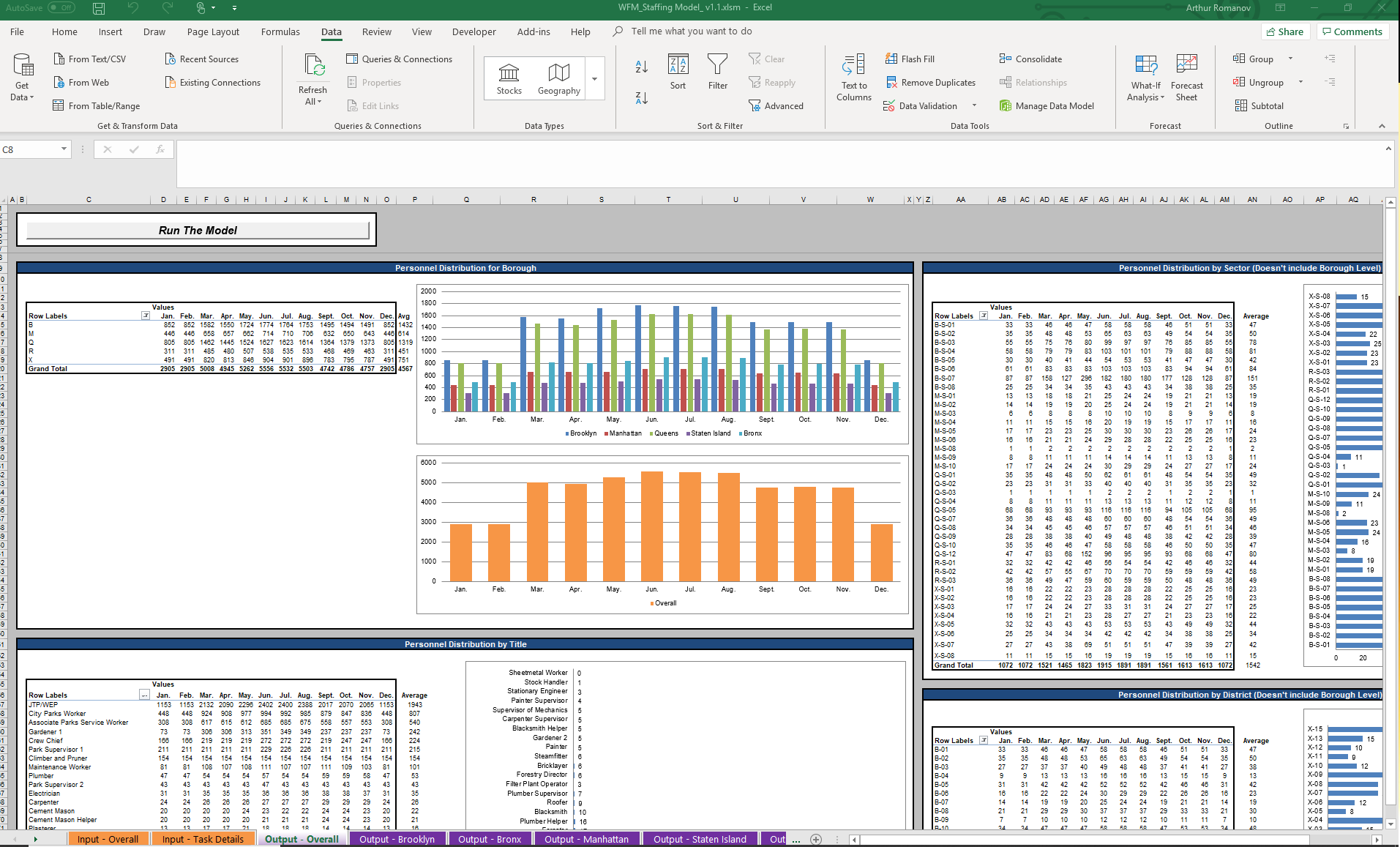
Claude's read-only audit describes an operator who writes long specifications, delegates deeply, uses subagents, and ships from inside the loop. A local workforce-management archive adds direct experience with staffing, time, titles, salaries, budgets, and reporting.
Open the primary audit“You are dispatching work, not chatting.”

The builder behind the application
MakeLane.ai is the studio Arthur is building to turn an idea into a working revenue system—brand, leads, bookings, deposits, CRM, and follow-up in one connected operating lane. It is living proof of the same discipline this application argues for: frame the system, train the tools, inspect the output, and ship.
Translate a short business idea into a coherent customer journey.
Orchestrate specialized tools around explicit outcomes and gates.
Move from positioning to production with visible, testable progress.
Codex / professional assessment
Arthur reads as a high-agency systems operator: unusually comfortable moving between product thinking, technical execution, and the unglamorous work of making a process run end to end.
The strongest evidence is not raw AI volume. It is the repeated build → verify → ship pattern, plus a low interrupt rate. He gives systems enough context to work, then stays accountable for the output.
The audit shows reusable skills and documented commands lagging far behind usage. The next level is to turn personal operating instinct into shared playbooks, evaluation sets, and measurable standards.
I would recommend him for a role where knowledge quality is both editorial and operational—especially when the mandate is to build the system, not merely maintain a queue.
Assessment scope: Claude's published local audit, the application materials available in this workspace, and observed collaboration on this build. It is not an employment reference or a claim of access to private platform analytics.
First 90 days
Days 01–30
Map the product and policy surface, identify owners, baseline the current agent, and create the first 100-question evaluation set.
Days 31–60
Launch the gap register, structured documentation pattern, failure taxonomy, release gates, and a weekly review rhythm.
Days 61–90
Expand systematic coverage, automate regression testing, publish the quality dashboard, and prove improvement against the baseline.
The close